
Short Oil Alkyd Resins (28–43% Oil Length) — 2K Polyurethane, NC & Amino Stoving Binders
High-hydroxyl functionality (2.8% – 4.0% OH) drying and non-drying short oil alkyds engineered for 2K polyurethane furniture coatings, cellulosic (NC) lacquers, acid-curing varnishes, and industrial baking enamels.
ALKYD FA38 X65
Short-Oil Alkyd Resin Based on Vegetable Fatty Acid
ALKYD FA43 X65
Short-Oil Alkyd Resin Based on Vegetable Fatty Acid
ALKYD FA43 T65
Short-Oil Alkyd Resin Based on Vegetable Fatty Acid
ALKYD FA29 X65
Short-Oil Alkyd Resin Based on Vegetable Fatty Acid
ALKYD CFA33 BG60
Short-Oil Non-Drying Alkyd Resin Based on Coconut Fatty Acid
ALKYD CO43 X60
Short-Oil Alkyd Resin Based on Castor Oil
Short Oil Alkyd Chemistry: Hydroxyl Functionality (OH%) & Cross-Linking Systems
Short oil alkyd resins (28–43% oil length) feature a high concentration of aromatic phthalate esters and controlled hydroxyl (-OH) functional groups. Rather than relying solely on atmospheric autoxidation, short oil alkyds are engineered as reactive co-binders for two-component (2K) polyurethane coatings, amino/melamine baking (stoving) enamels, acid-catalyzed wood finishes, and plasticizing resins for nitrocellulose (NC) lacquers.
Manufactured in Xylene, Toluene, or Butyl Glycol / Solvesso 100 cuts, SRC Resin’s SRC-3000 series spans vegetable fatty acid, soybean oil, castor oil, and fully saturated coconut fatty acid grades. With hydroxyl contents from 2.80% to 4.00% OH and ultra-low Gardner color (≤ 3–5), these resins deliver rapid sanding, exceptional surface hardness, chemical resistance, and non-yellowing whiteness retention.
Core Engineering Specifications of the Short Oil Series
Drives high cross-link density with polyisocyanates (2K PU) and melamine-formaldehyde stoving resins.
Includes non-yellowing Coconut (SRC-3040) and flexible Castor Oil (SRC-3050) non-drying plasticizing grades.
Full compatibility with ester, ketone, and aromatic thinners used in 2K PU, NC, and coil/can coatings.
Water-white clarity for clear wood lacquers and predictable pot-life in 2K isocyanate mixes.
Primary Coating & Lacquer Applications
Where coating formulators specify SRC-3000 series short oil alkyd resins:
2K Polyurethane Wood & Furniture Coatings
Easy-sanding wood sealers, high-gloss clear topcoats, and non-yellowing white furniture lacquers cured with TDI/HDI polyisocyanates.
Nitrocellulose (NC) Furniture & Industrial Lacquers
Plasticizing co-binders for NC 25/27/30 solutions, imparting high build, gloss, substrate adhesion, and cold-check crack resistance.
Amino / Melamine Industrial Stoving Enamels
Baking enamels (120–160°C) for appliances, metal office furniture, radiators, drums, and automotive OEM components.
Acid-Curing (SH) Parquet & Furniture Finishes
Catalyzed urea/melamine wood coatings delivering rapid cure and superior scratch/chemical resistance.
2K Polyurethane, Stoving & NC Blending Ratios for Short Oil Alkyds
Depending on the coating architecture, short oil alkyds are formulated using three primary cross-linking or blending ratios:
Stoichiometric cross-linking with aromatic (TDI adduct) or aliphatic (HDI biuret/trimer) hardeners.
Cured at 130°C – 150°C for 20–30 minutes for high hardness and overbake color stability.
Eliminates nitrocellulose brittleness while boosting gloss, fullness, and wood adhesion.
R&D Technical Articles on Alkyd Resin Chemistry
Explore in-depth formulation guides authored by our polymer engineering team.
Why Do Alkyd Resins Yellow?
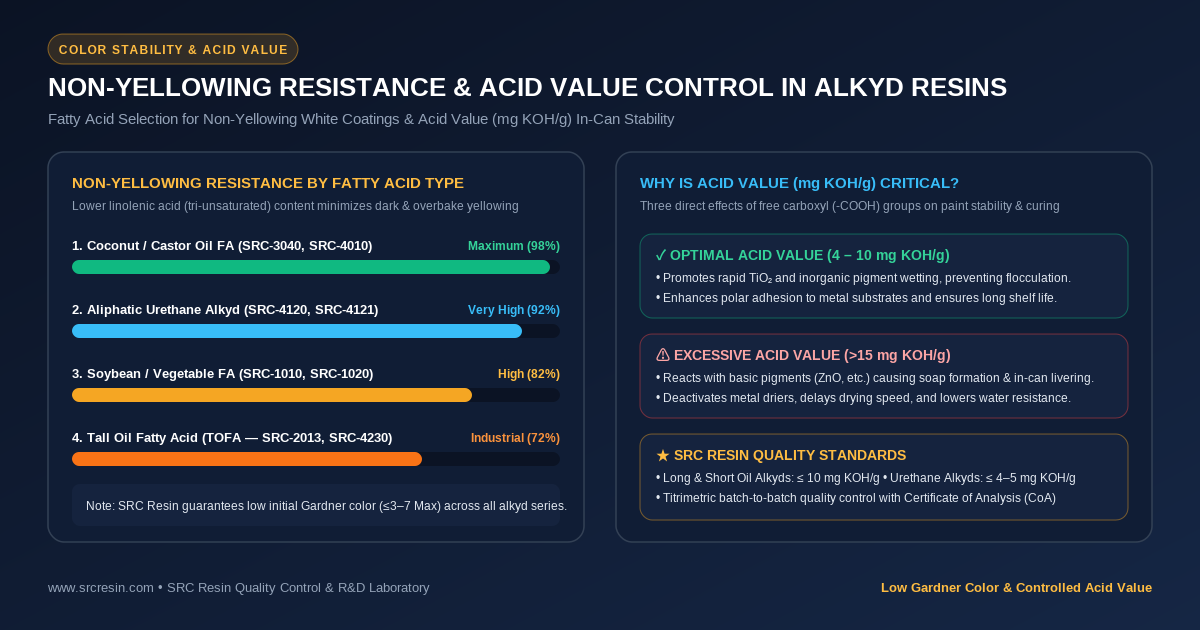
Yellowing in alkyd resins is influenced by fatty acid structure, curing mechanism, drier balance and environmental exposure. In light-colored coatings, color stability is a critical performance factor. This article explains the technical causes of yellowing in alkyd systems and outlines how proper resin selection and curing design can minimize discoloration.
Differences Between Fast Drying Alkyd Resins and Non-Drying Alkyd Resins
Fast drying and non-drying alkyd resins are designed for different curing mechanisms in industrial coating systems. While fast drying alkyds cure by air oxidation, non-drying alkyds require controlled curing such as oven or catalytic systems. This article explains the key differences between fast drying and non-drying alkyd resins and provides guidance on selecting the correct system for industrial applications.
What Is a Non-Drying Short Oil Alkyd Resin?
Non-drying short oil alkyd resins are developed for industrial coating applications where air drying is not sufficient or not desired. These resins do not cure by oxidation alone, but instead require controlled curing systems such as amino resins or polyurethane crosslinkers. This article explains where non-drying short oil alkyd resins are used, their key advantages, and how SRC-3040 (ALKYD CFA33 BG60) fits into oven-cured and high chemical resistance coating systems from a manufacturer’s perspective.
SHORT OIL ALKYD TECHNICAL FAQ
Frequently Asked Questions About Short Oil Alkyd Resins
In 2K polyurethane and amino stoving coatings, chemical cross-linking occurs directly through the resin’s free hydroxyl (-OH) groups. Higher OH content (such as SRC-3040 at 4.00% OH) increases cross-link density, resulting in faster sandability, higher König pendulum hardness, and superior resistance to solvents and household chemicals.
Coconut fatty acid-based SRC-3040 is 100% saturated (zero double bonds), offering absolute non-yellowing stability under UV light and high-temperature baking (overbake). Castor oil-based SRC-3050 contains ricinoleic chains with intrinsic secondary hydroxyls, providing exceptional flexibility, impact resistance, and cold-check durability in NC and 2K wood lacquers.
SRC-3010 (38% oil, 2.9% OH in Xylene) and SRC-3030 (29% oil, 3.2% OH in Xylene) are workhorse grades for fast-drying NC sealers and 2K PU wood coatings, while SRC-3050 (Castor-based in Toluene) is preferred for high-flexibility NC topcoats.
Let's Select the Optimal Alkyd or Acrylic Resin for Your Formulation
Our R&D engineering team provides laboratory samples, TDS/SDS documentation, and custom viscosity or solids adjustments.
Request Quote & Sample